New Title
What Supporting Modifications should i consider when a Bullbar is being added to a vehicle?
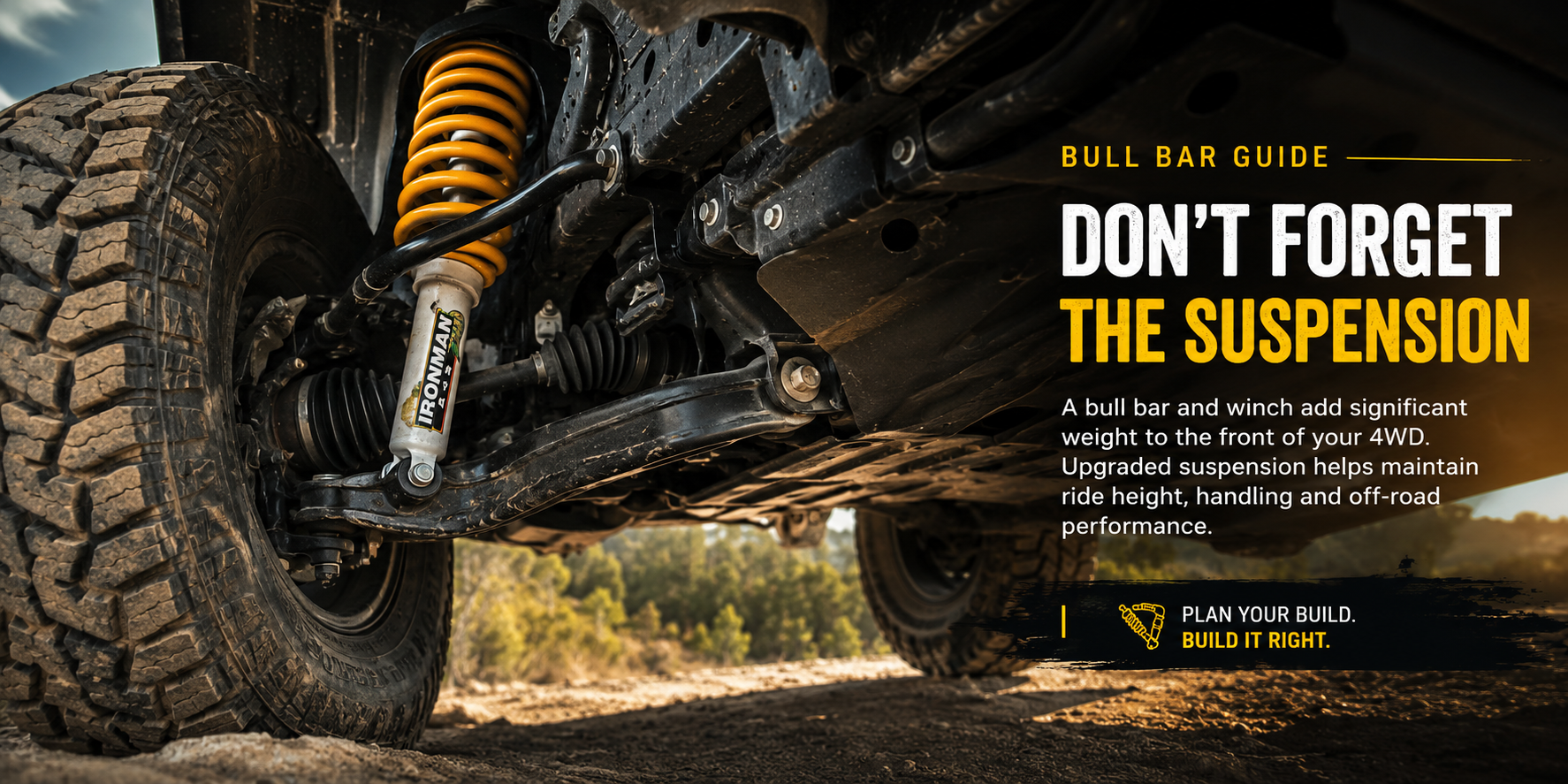
One of the most common mistakes when fitting a bull bar is focusing only on the bar itself and overlooking the additional weight being added to the front of the vehicle.
A quality steel bull bar typically weighs 40–70 kg, depending on the vehicle and design. Add an electric winch (often 25–35 kg including rope and fairlead), driving lights and other accessories, and it's common for more than 80–100 kg to be added to the front axle.
That extra weight can affect:
- Ride height
- Suspension performance
- Steering feel
- Braking balance
- Ground clearance
- Approach angle
As a result, many touring and off-road builds include upgraded front suspension, typically through heavier-rate front coil springs and, in many cases, matched shock absorbers. Depending on the overall build and the intended use of the vehicle, this may also be incorporated as part of a suspension lift kit.
The correct spring rate depends on the constant accessory weight carried by the vehicle—not just the bull bar, but also the winch, dual batteries, underbody protection and any other permanently fitted equipment.
If you're planning multiple front-end accessories, it's worth considering the complete build before purchasing suspension components. This helps ensure the vehicle sits correctly, handles predictably and performs as intended both on and off road.
Building a capable 4WD starts with choosing the right equipment for the way you drive. Whether you're fitting out a work ute, preparing for remote touring or upgrading your weekend adventure vehicle, our team can help you select the right bull bar and supporting accessories for your build. Browse our Bull Bars, Shop by Vehicle, or contact our team for personalised advice.
Written by Barry Jensen Director of Badoffroad.nz 021615424
Writen